Data analysis changed in the 1940s
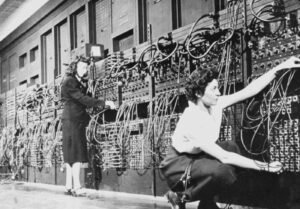 During the turmoil of World War II, a new approach to dark data emerged: the Era of Programming. Scientists began building electronic computers, like the Electronic Numerical Integrator and Computer (ENIAC) at the University of Pennsylvania, that could run more than one kind of instruction (today we call those “programs”) in order to do more than one kind of calculation. ENIAC, for example, not only calculated artillery firing tables for the US Army, it worked in secret to study the feasibility of thermonuclear weapons.
This was a huge breakthrough. Programmable computers guided astronauts from Earth to the moon and were reprogrammed during Apollo 13’s troubled mission to bring its astronauts safely back to Earth.

You’ve grown up during the Era of Programming. It even drives the phone you hold in your hand. But the dark data problem has also grown. Modern businesses and technology generate so much data that even the finest programmable supercomputer can’t analyze it before the “heat-death” of the universe. Electronic computing is facing a crisis.